
Iberdrola Photovoltaic Plant Inspection Startup Challenge

Thank you for your applications!

the innovation challenge by

Iberdrola operates over 5,000 MW of installed photovoltaic capacity in Spain. Maintaining this infrastructure requires regular inspections using visible spectrum and thermal cameras. These inspections check wiring and electrical connections located beneath the panels and their supporting structures. The goal is to identify potential hotspots early.

Currently, inspections are performed manually. Personnel walk through the entire plant carrying handheld thermal cameras. This process requires many operators, especially since plants are often remote and cover hundreds of hectares. Inspections can involve walking tens of kilometers and may take several days or even weeks to complete.
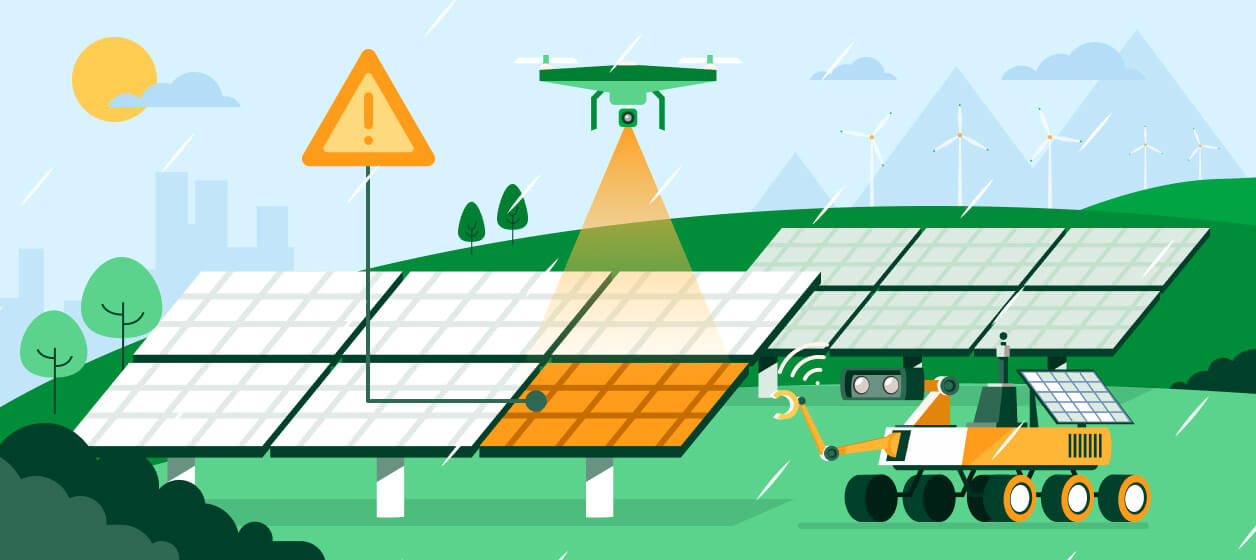
Through the Photovoltaic Plant Inspection Startup Challenge, Iberdrola seeks autonomous or remotely operated systems to detect anomalies and hotspots in wiring and connections beneath panels, which are not fully visible from drone inspections.

The terrain is often uneven, with brush, rocks, and panel supports, and sites face harsh weather such as heat, rain, and strong winds. Solutions must withstand these conditions while improving efficiency, cutting costs and time, and reducing employee risk.

Iberdrola’s Photovoltaic Plant Inspection Startup Challenge seeks autonomous or remotely operated systems to improve photovoltaic plant inspections. The goal is to detect anomalies and hotspots in wiring and connections beneath panels, which are not fully visible by drones. Solutions must handle uneven terrain, obstacles, and harsh weather while improving efficiency, reducing costs and time, and enhancing worker safety. Potential solutions may include, but are not limited to:

Fully autonomous or remotely operated vehicles and drones adapted for challenging terrain.

Visible & thermal imaging or video capture with condition scanning + data analysis, 3D modeling, or digital twin.

Defect detection models with automated alerts and inspection reporting.

Automatic battery charging systems with distributed charging bases across the plant.

Optimized deployment of devices & charging bases for minimal inspection time & resource management.

Continuity of energy generation and no risk of generating high temperatures or sparks.

Ease of deployment, use, and minimal training requirements.

Compliance with Health, Safety, and Environmental (HSE) standards.

Winning this Challenge will award you with collaboration and proof of concept (PoC) agreement with PERSEO and/or with any other relevant Iberdrola group company. Additionally, PERSEO will cover the costs of the pilot activities and will provide you with the necessary technical support, giving access to infrastructure and real data to test your solution.

Pilot Project

Sign a collaboration agreement with Iberdrola and/or PERSEO. The project costs are covered & you will get full technical support to test your solution.

New Clients

If the pilot project succeeds, Iberdrola and/or PERSEO will add your solutions to its service territory and relevant companies within the group.

Scaling

If the pilot succeeds, Iberdrola and/or PERSEO may offer you the opportunity to scale up your solution by means of commercial agreements.

Possible Investment

PERSEO, Iberdrola’s Startup Program, might consider investing in the winner’s solution as well.

Timeline

08 SEPTEMBER 2025
Applications Open

17 OCTOBER 2025
Application Deadline

NOVEMBER 2025
Winner Announcement

DECEMBER 2025 ONWARDS
Pilot Projects Begin

For more information, click here to check all of the Iberdrola Startup Challenges to find innovative solutions.

FAQs

See our responses to some of the most common questions or view our Terms & Conditions.

What is the background of this Challenge?

Iberdrola operates over 5,000 MW of installed photovoltaic capacity in Spain, requiring regular inspections to ensure system integrity and operational safety. These inspections use visible-spectrum and thermal cameras to evaluate wiring and electrical connections located beneath panels and their supporting structures, with the primary goal of identifying potential hotspots.

Currently, inspections are conducted manually by personnel walking through entire plants with handheld thermal cameras. Given that photovoltaic plants are often situated in remote areas and span hundreds of hectares, the process involves covering long distances and deploying large teams over several days or even weeks. This approach is time-consuming, resource-intensive, and increasingly inefficient as infrastructure expands.

The Photovoltaic Plant Inspection Startup Challenge is seeking autonomous or remotely operated systems to optimize inspections of photovoltaic plants. The goal is to detect anomalies and hotspots in wiring and connections beneath panels, areas not fully visible through drone inspections. Plants are often located in remote areas with uneven terrain, dense vegetation, and structural obstacles, and are exposed to extreme weather, making inspections challenging. Proposed solutions should enhance efficiency, reduce time and costs, and improve safety while ensuring uninterrupted energy generation.

Preferred approaches include autonomous ground or aerial vehicles, advanced imaging systems, analytics-driven tools such as 3D modeling, and automated reporting. Systems must demonstrate maturity, reliability, and cost-effectiveness, be easy to deploy with minimal training, comply with HSE standards, and operate safely without generating sparks or excessive heat.

What are the Challenge's key benefits for me?

The winner of this challenge will receive an exclusive opportunity to collaborate with Perseo and/or other relevant Iberdrola group companies. This includes signing a collaboration and proof-of-concept (PoC) agreement, along with direct membership as a collaborator or associate of the Global Smart Grids Innovation Hub (GSGIHub).

WHAT PERSEO AND IBERDROLA WILL OFFER

Full Coverage of Costs – Perseo and/or the relevant Iberdrola company will assume all costs associated with the collaboration and proof of concept.
Technical Support & Access – The winner will receive comprehensive technical assistance to test their proposed solution, including access to cutting-edge equipment, appliances, infrastructure, high-tech facilities, and dedicated workspaces.
Real-World Testing Environment – The winner will be provided with real data and a practical setting to validate their solution.

GROWTH AND INVESTMENT POTENTIAL

Should the proof of concept yield successful results, Perseo and/or the relevant Iberdrola company may offer the opportunity to scale up the solution through commercial agreements. Additionally, PERSEO may explore the possibility of investing in the winning startup or participant.

This is a unique opportunity for the winning startup to accelerate innovation, scale their solution, and establish a strategic partnership with one of the world’s leading energy companies.

Why are Iberdrola and/or PERSEO the right partners for my company?

If selected, your company will collaborate on a pilot project with specialized technicians from Iberdrola.

Iberdrola is no stranger to working with startups and emerging companies - since 2018, the Group has launched over 80 pilot projects with startups to address pressing issues in today's energy networks. Moreover, working with Iberdrola presents a unique opportunity:

Winning this Challenge will award you with signing a collaboration agreement for the development of a proof of concept (PoC). The PoC will be developed in collaboration with Iberdrola or any other relevant Iberdrola group company.

Additionally, PERSEO covers the costs of the pilot activities and provides you with the necessary technical support, giving access to infrastructures and real data to test your solution.

Finally, PERSEO may consider investing in your solution!

What kind of solutions is Iberdrola looking for?

Iberdrola, through its PERSEO Startup Program, is seeking autonomous or remotely operated systems to improve photovoltaic plant inspections. The goal is to detect anomalies and hotspots in wiring and connections beneath panels, which are not fully visible by drones. Solutions must handle uneven terrain, obstacles, and harsh weather while improving efficiency, reducing costs and time, and enhancing worker safety.

The challenge focuses on solutions in the following areas:

Fully autonomous or remotely operated vehicles and drones designed to navigate uneven terrain, dense vegetation, and other obstacles.
Integrated visible and thermal imaging or video capture with advanced data analysis, including 3D modeling and digital twin solutions.
Automated defect detection with real-time alerts and comprehensive inspection reporting.
• Optional automated battery charging systems with multiple distributed charging stations across the plant.
• Optimized allocation and intelligent management of devices and charging infrastructure to minimize inspection time.

What do I need to know about the Pilot Project?

The winner of the challenge will sign a partnership contract with Iberdrola and/or PERSEO and will be able to test their solution in a real environment.

For the collaboration of the pilot project, Iberdrola will:

• Assume the costs of the collaboration and the proof of concept
• Provide the necessary technical support to test the solution proposed
• Give access to equipment, appliances, infrastructure, high technology sites, and joint work areas
• Provide a real environment and real data to test the solution

The project will be developed in collaboration with technical specialists from Iberdrola.

Can I submit more than one proposal?

You are welcome to submit more than one proposal, just make sure to submit a separate application form for each proposal.

When is the application deadline?

The application period for this challenge ends on 17th October 2025.

How will the applications be evaluated?

While evaluating your proposals, Iberdrola will consider the following value propositions, among others:

• Maturity and reliability of the solution
• Autonomous operation capabilities
• Optimization of investment and operating costs
• Implementation and staffing costs
• Ease of deployment, use, and minimal training requirements
• Continuity of energy generation
• No risk of generating high temperatures or sparks
• Compliance with Health, Safety, and Environmental (HSE) standards